

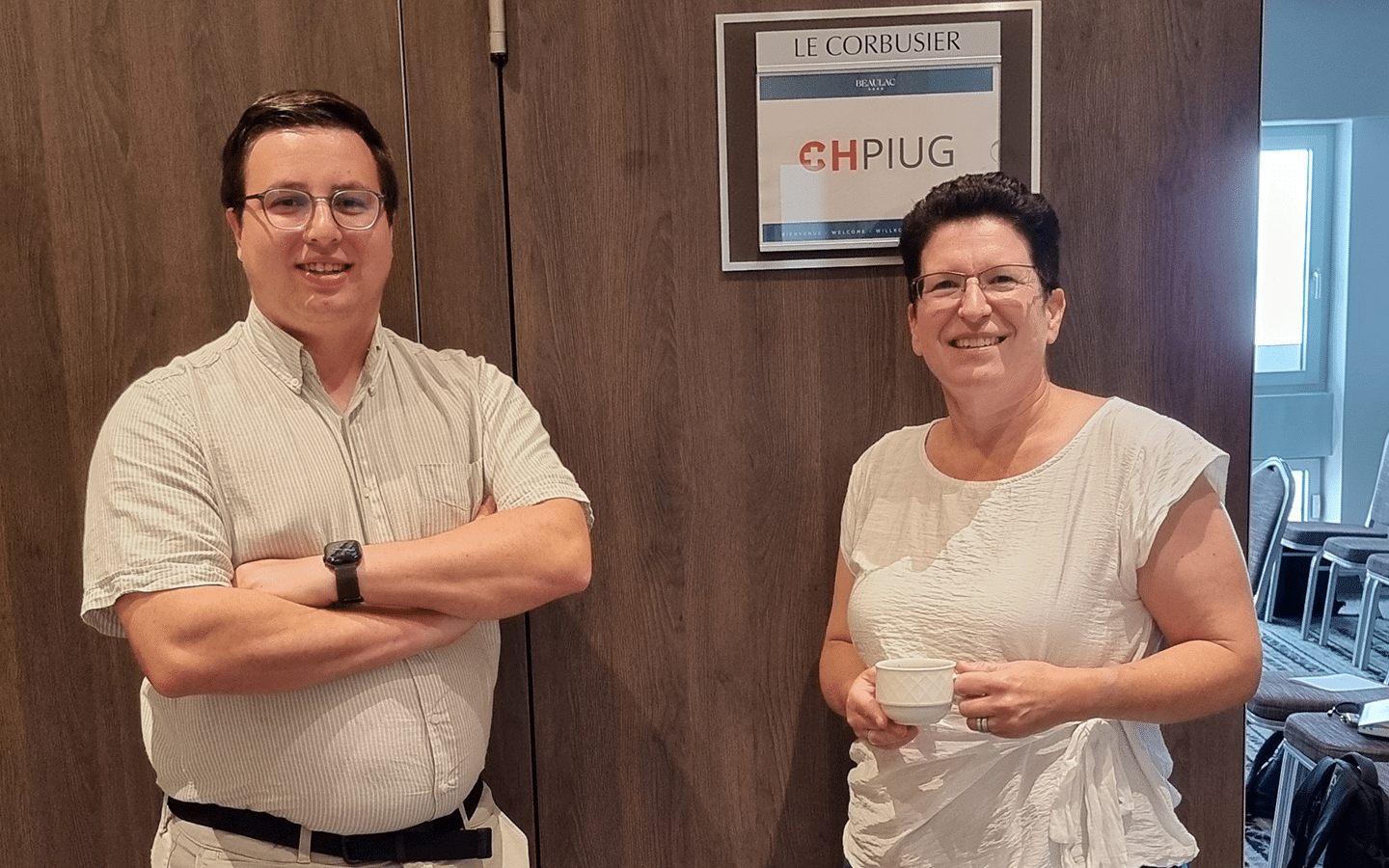
On Tuesday 29 September, Neuchâtel hosted the CHPIUG (Swiss Patent Information User Group) Autumn Meeting 2026, the annual gathering of Swiss patent information professionals. These specialists play a strategic role in the world of intellectual property: they search, analyse and synthesise scientific, technical and legal information to help companies assess whether their inventions are patentable, identify risks related to the commercialisation of their products, map their competitive landscape and monitor technological developments in their sector. Patent search, in its various forms, is an essential decision-making tool for any organisation that innovates.
P&TS was represented at this event by Emmanuelle Bourbon, Patent Information Analyst and head of the research and monitoring team, accompanied by her colleague Augustin Muster-Bender. P&TS brings together a team of patent information analysts with a background in engineering, patent law and patent search, four of whom are QPIP (Qualified Patent Information Professionals) certified, ensuring the highest international standards in patent search. The close collaboration between this team and the firm’s patent attorneys ensures that each search is precisely targeted and directly integrated into the client’s intellectual property protection and valorisation strategy. P&TS took the opportunity of this event to speak with Emmanuelle about her profession and what these services concretely bring to its clients.
What does your job as a patent information analyst involve?
First and foremost, searching for scientific, technical and legal information, then analysing its relevance and synthesising it. We mainly look for documents that could call into question our clients’ inventions or that could jeopardise the commercialisation of their products. This requires basic scientific knowledge and training in patent information, skills that have been recognised and certified for several years by an international organisation, the ISBQPIP with which I collaborate. The qualities required for this profession are curiosity, perseverance and a good capacity for synthesis.
What exactly is the purpose of patent search in intellectual property?
In fact, I would rather talk about patent SEARCHES in intellectual property. A patentability study aims to obtain a strong patent that is difficult to challenge; a freedom-to-operate search aims to identify all existing patents that could protect the features of a product or process; panoramic searches (or landscapes) provide knowledge of the ecosystem in which our clients operate, including their competitors, their patent activity, as well as the discovery of niches, collaboration opportunities, etc. Monitoring allows these activities to be tracked over the long term. These different types of searches allow us to guide and advise our clients with excellent visibility in their intellectual property strategy.
What is the advantage for P&TS of having a dedicated analysis team?
Patent and trademark law firms often do not have in-house analysts, and organisations employing patent information analysts often do not have patent attorneys. Having both under one roof therefore makes it possible to gain in efficiency and quality. While the analyst excels in research and information processing, the attorney knows the strategy and needs of their clients. Working in tandem makes it possible to direct and target searches in order to precisely meet the client’s needs. It is therefore a time saving and an efficiency gain in favour of our clients.
At P&TS, several types of searches are carried out, but also monitoring: what is the difference?
We carry out one-off searches such as patentability, validity and freedom-to-operate searches, which provide a result at a given point in time. Depending on the projects and ambitions of our clients, these searches can be updated periodically. We monitor, for example, the legal status (grant, opposition, lapse…) of particularly relevant patent documents, but also the publication of new patents relating to a particular field of activity (technology watch) or patents filed in the names of competitors (competitive intelligence). To make the results of this monitoring available to our clients, we use the most modern secure web platforms to allow users to receive a rigorous selection of the patents they need to know about, and to analyse the strategic information in their field.
Patent search and monitoring give innovative companies a precise vision of their technological and competitive environment. Knowing whether an invention is patentable, ensuring that a product can be commercialised without risk of conflict, identifying opportunities in a sector or anticipating the movements of competitors: these analyses guide decisions that often involve significant investments.
At P&TS, the day-to-day collaboration between the research and monitoring team, headed by Emmanuelle Bourbon, and the firm’s patent attorneys allows each client to benefit from a search tailored to their real needs, whether to strengthen the robustness of a patent, secure the commercialisation of a product or build a coherent intellectual property strategy over the long term.
For more information on these services, visit the dedicated pages:
